.mobaxterm19436666DocsProgramming
Related
Understanding the Shift: From Machine Code to Generic Software DevelopmentDual Parameter Style Support in mssql-python: Q&A GuideTransform Your Outdated NVMe Drive into a Blazing-Fast Portable SSDThe Rise of Enterprise Vibe Coding: Unprecedented Productivity Meets AI Governance ChallengesHow to Implement Immutable Admission Policies in Kubernetes v1.36 Using Manifest FilesExploring .NET 11 Preview 4: New Features and Enhancements Across the EcosystemModernizing Your Go Codebase with the Revamped `go fix` CommandMastering VS Code Snippets: Boost Your Coding Efficiency with Custom Shortcuts

10 Things You Need to Know About Turbovec: The Rust Vector Index Powered by Google’s TurboQuant

Last updated: 2026-05-21 05:32:34 · Programming
10 Things You Need to Know About Turbovec: The Rust Vector Index Powered by Google’s TurboQuant
Source: www.marktechpost.com

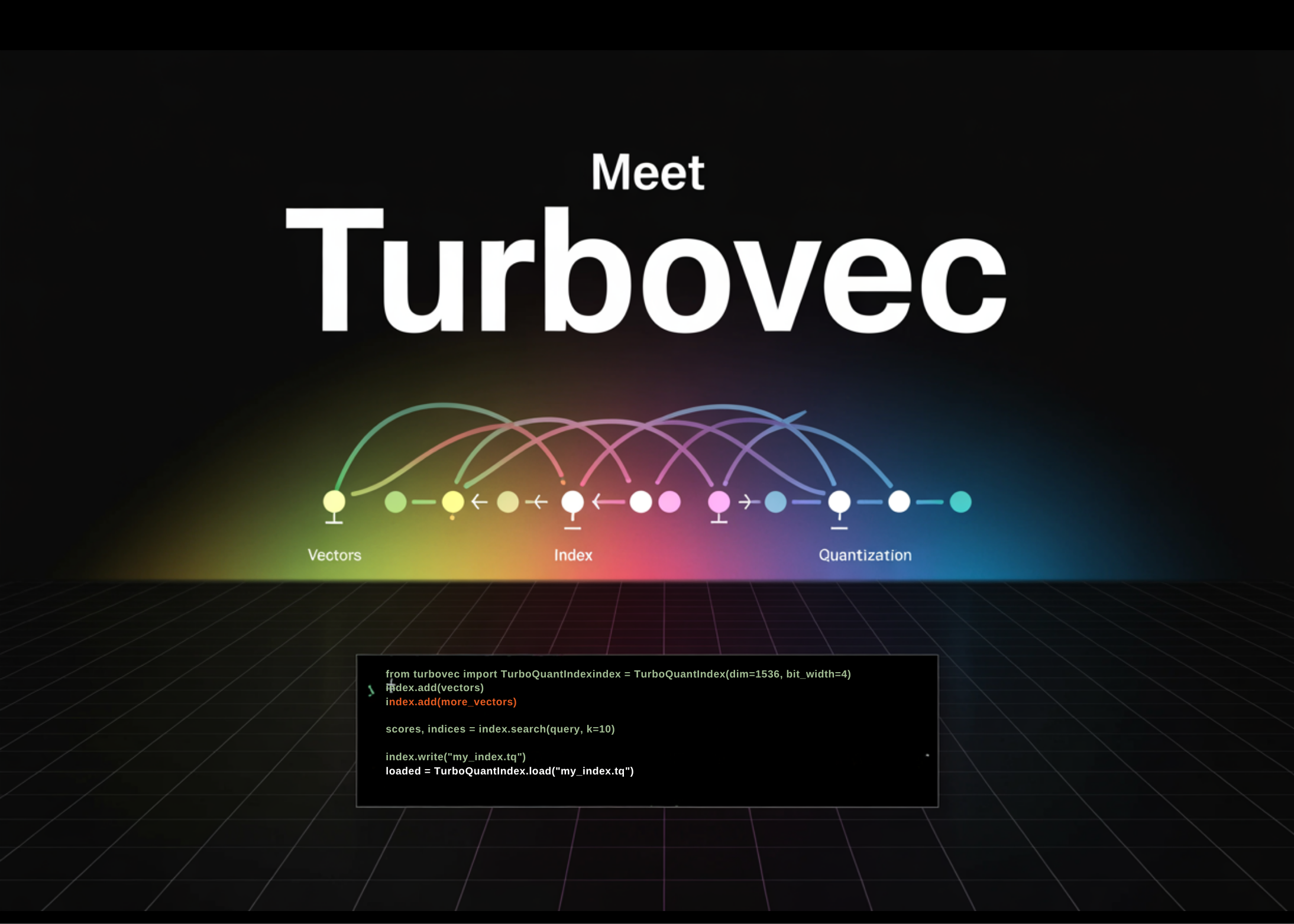
Retrieval-augmented generation (RAG) pipelines have become the backbone of modern AI applications, but scaling them comes at a cost. Storing 10 million float32 embeddings consumes 31 GB of RAM—a serious constraint for teams running local or on-premise inference. Enter Turbovec, an open-source vector index written in Rust with Python bindings that leverages Google Research’s TurboQuant algorithm. It slashes memory usage by 8x (to just 4 GB for the same corpus) and delivers search speeds that outpace FAISS IndexPQFastScan by 12–20% on ARM hardware. Below, we break down the ten essential details you need to know about this library, from its unique quantization approach to real-world performance numbers.

10 Things You Need to Know About Turbovec: The Rust Vector Index Powered by Google’s TurboQuant
Source: www.marktechpost.com