Urgent: Organizations Urged to Replace Static Credentials with Identity-Based Access
Critical vulnerability persists across Windows environments as most enterprises still rely on static credentials—shared admin accounts, long-lived domain passwords, and manual privileged access—that remain valid for months or years, according to a new analysis from HashiCorp. The flaw creates a wide attack surface for lateral movement and credential theft.
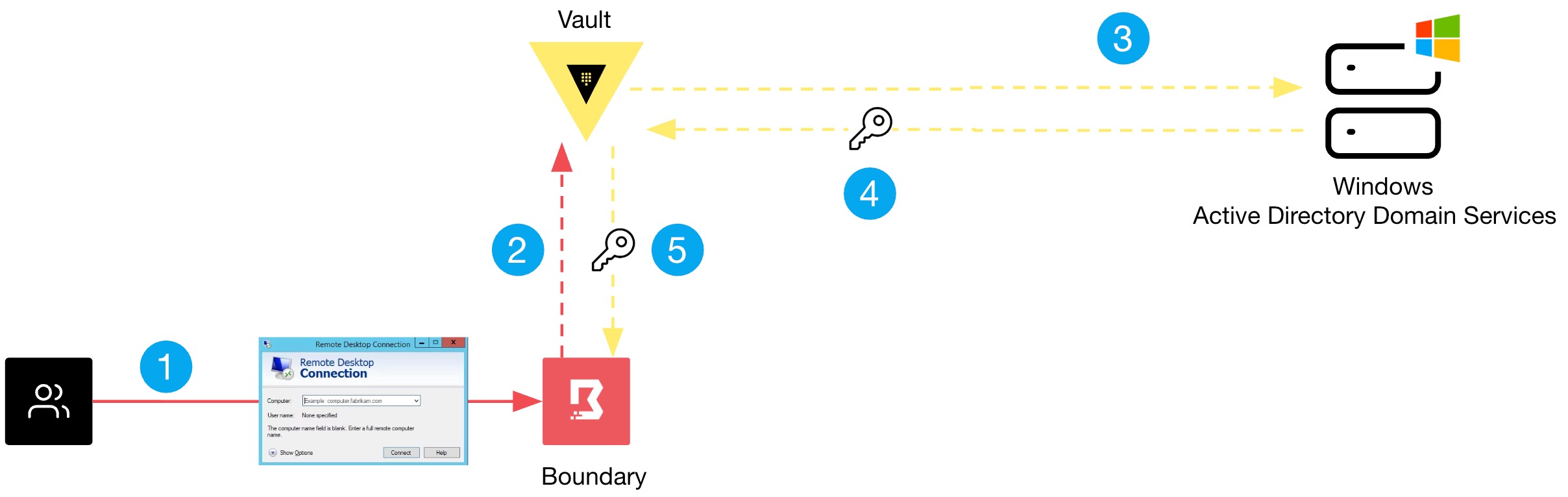
“Static credentials are a ticking time bomb when used for remote access to Windows machines,” said Dr. Maria Chen, Principal Security Architect at CyberDefense Labs. “Organizations are stuck with manual rotation and shared accounts, which directly contradicts zero-trust principles.” This problem is particularly acute for Remote Desktop Protocol (RDP) access, troubleshooting, and emergency break-glass scenarios, where reuse of passwords across sessions is common.
Broader VPN Access Magnifies the Risk
Traditional VPNs compound the issue by granting overly broad network access. Firewalls and security groups rely on IP addresses, not user identity, making access control brittle—especially in dynamic cloud environments where IPs are ephemeral. “VPNs solve connectivity, not access control at the user-to-resource level,” explained James Okafor, CISO of SecurePath Consulting. “You need a solution that handles both credentials and granular access together.”
Background: The Decades-Old Credential Crisis
Despite advances in secrets management, many Windows environments still use shared local administrator accounts, long-lived domain accounts, service accounts with static passwords, and manually provisioned privileged credentials. Manual rotation is often skipped due to operational burden, leaving credentials active for extended periods. Multi-factor authentication (MFA) improves login verification but does not remove the underlying static credential model.
This exposure is especially dangerous for remote access. Without automation, credentials are reused across sessions, increasing the risk of compromise. “CISO, DevOps, and security teams should be deeply concerned,” warned Dr. Chen. “A single leaked static password can lead to full network compromise.”
New Model: Boundary and Vault Combine Authentication and Credential Management
HashiCorp’s Boundary fundamentally changes the approach by combining authentication and authorization onto a single platform. Instead of granting broad network access, it creates a direct connection between a user and a target resource based on the user’s identity. Boundary handles credentials on the user’s behalf, brokering secrets from Vault dynamically.
“This pattern eliminates the need for static credentials entirely,” said James Okafor. “Dynamic secrets are generated per session, automatically rotated, and never exposed to the user. This is a game-changer for Windows environments.” The solution also integrates with existing directory services (LDAP, Active Directory) and supports fine-grained role-based access control (RBAC).
Key Benefits at a Glance
- Identity-based access: Users are authenticated and authorized per session, not per IP.
- Dynamic credentials: Vault generates short-lived secrets for each session, eliminating static passwords.
- Reduced lateral movement: No network-level access; only direct user-to-resource connections.
- Simplified operations: Automated credential rotation and single-pane management.
What This Means for Security Teams
For organizations still relying on VPNs and static passwords, this shift offers a concrete path to zero-trust architecture. The combined Boundary + Vault approach directly addresses the two hardest challenges: credential exposure and overly broad network access. “This is not just incremental improvement—it’s a fundamental redesign,” commented Dr. Chen.
Configuration steps for testing are available, allowing teams to pilot the model quickly. This is an urgent call to action: evaluate your current remote access posture and consider replacing static credentials with identity-based, dynamic secrets management before a breach occurs.