Imagine a world where the next AI chatbot you use is powered not by a sprawling data center in some remote desert, but by a sleek box humming next to a neighbor's house. That's exactly the vision Nvidia and startup Span are pushing: a distributed grid of mini-data centers tucked into residential neighborhoods. But behind this futuristic idea lies a tangle of grid economics, homeowner incentives, and technical hurdles. Here are 10 essential things you need to know about this bold—and controversial—plan.
1. The Real Bottleneck Isn’t Chips—It’s Power
Everyone assumes the biggest obstacle to expanding AI infrastructure is the chip shortage or the cost of hardware. But Nvidia’s bet on home data centers highlights a deeper problem: the electrical grid can’t keep up. Building new data centers requires upgrading transformers, substations, and transmission lines—expensive projects that often take years. The result? A “power play” where the scarce resource isn’t compute, but watts.
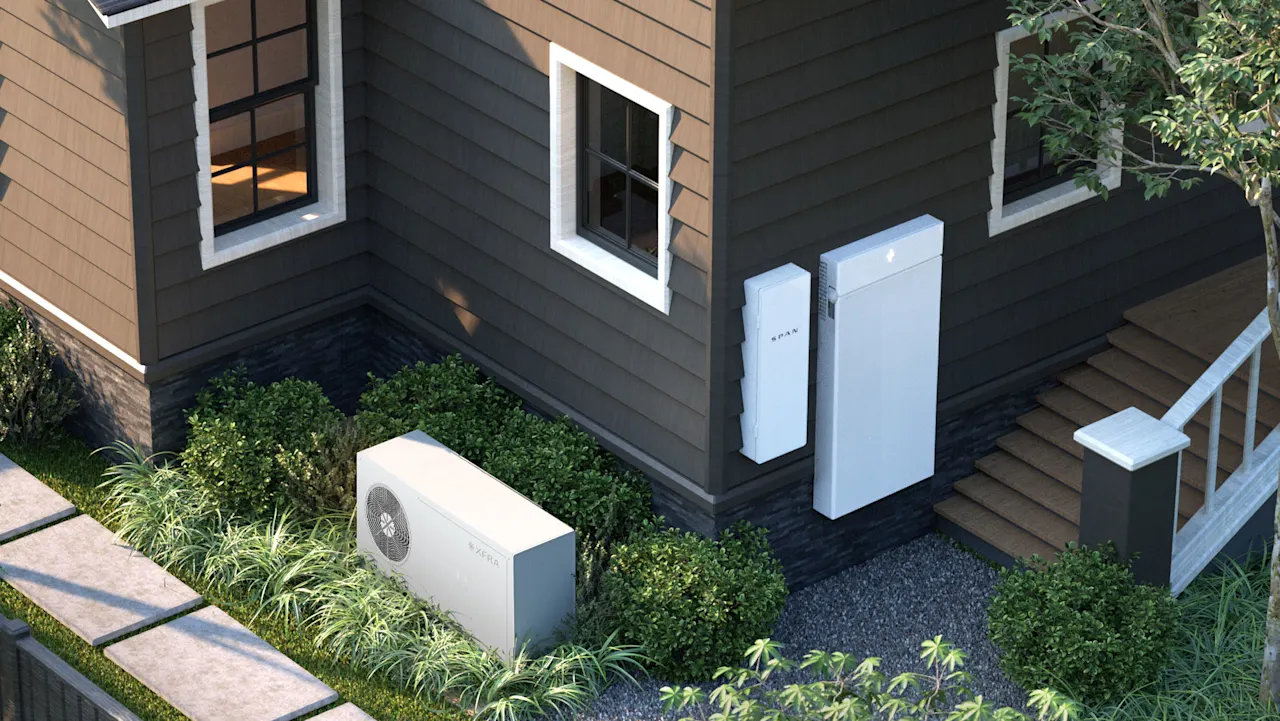
2. Span’s Smart Box Steers Idle Electricity to GPUs
The key technology comes from Span, a California company that makes smart utility boxes. The average U.S. home uses only about 42% of the electricity allocated to it by the grid, leaving a huge buffer. Span’s box monitors real-time household consumption and automatically diverts any unused capacity to an attached computing node—so the GPUs run on power that would otherwise sit idle.
3. Each Node Packs Serious Hardware
Don’t let the HVAC-like exterior fool you. Inside Span’s “node” are 16 Nvidia GPUs, 4 AMD CPUs, 4 terabytes of RAM, and a dedicated cooling system. That’s enough computing power to handle a range of AI workloads, from training small models to serving real-time chatbot queries. The unit is designed to be virtually silent and weatherproof, blending into the streetscape.
4. Homeowners Get a Sweet Incentive: Free Electricity and Internet
Span plans to make the offer hard to refuse. In exchange for hosting a node on their property, the company will pay a significant portion of the homeowner’s electricity bill—plus their broadband internet. For families struggling with rising utility costs, that could mean hundreds of dollars in savings each year. But critics ask: at what cost to transparency and grid fairness?
5. Proximity to Users Could Speed Up AI Responses
One strong argument for distributed computing is latency. Today, when you ask a chatbot a question, your request may travel hundreds of miles to a centralized server farm. With nodes sitting in your neighborhood, that round trip shrinks to milliseconds. Span argues this could enable new, time-sensitive AI applications—like real-time video analytics or emergency response systems—that rely on ultra-low delays.
6. But the Tech Is Still Mostly Unproven
Despite the polished pitch, Span’s distributed data center idea is almost entirely theoretical. As of now, the company has built only prototypes and has not installed a single node outside a real home. When asked about technical validation, Span VP Chris Lander cited “internal studies” and modeling—but no public benchmarks. The first real-world tests are still on the drawing board.
7. The Only Home So Far? A Single Model House in Atlanta
Span has partnered with Pulte Homes, one of America’s largest homebuilders, to integrate the nodes into new construction. But Pulte told CNBC that exactly one home—a model house—has had a Span unit installed. That’s a far cry from the thousands of units needed to make the distributed grid viable. Lander acknowledges the collaboration is still in the “proof of concept” phase.
8. A Pilot of 100 Nodes Is Promised—but Details Are Scarce
Span says it will deploy “upwards of 100” advanced prototype nodes later this year as part of a pilot project. However, the company refuses to disclose where or when this pilot will happen. Without a clear timeline or location, skeptics are left wondering whether the technology can move beyond the laboratory and into cookie-cutter suburbs.
9. The Same Old Fear: Higher Electric Bills for Everyone
Opponents of new data centers often point to the risk of cost shifting. When a central data center demands more power, utilities must upgrade infrastructure—and those costs typically get spread across all ratepayers. Some argue that scattering thousands of home nodes could have the same effect. Even if each node sips only surplus power, the cumulative draw might still strain transformers and lead to higher local bills.
10. Span Fights Back: Distributed Is Different
Span’s Chris Lander pushes back on the cost-shifting argument. He argues that because the nodes use already-allocated residential capacity—power that the utility already planned for—there’s no need for grid upgrades. The smart box ensures the node never draws more than what’s available, so peak demand on the neighborhood transformer doesn’t change. Lander says, “We believe it’s fundamentally different from building a 100-megawatt campus.” Only time—and real data—will tell if that logic holds up.
Conclusion: Nvidia and Span have thrown a compelling idea into the ring: put the compute where the power already lives. It’s an elegant solution to the grid bottleneck, and the homeowner incentives are enticing. But the gap between a slick concept and a functional reality remains wide. With just one model home, a handful of prototypes, and no public performance data, the distributed data center dream is still far from plug-and-play. If the pilot later this year delivers results, we might see a new model for AI infrastructure—one that brings the cloud down to earth, one backyard at a time.